

Writing Words Fantastical and Otherwise

Tag: writing advice

Sunday Writing: Creating Believable High School Characters

86

The FMHS class of 1986 held their 30th reunion this weekend.  That’s my wife’s graduating class.  We perused the photos and videos that the class posted on their FB website.  The don’t look that old.  I can still see the teenagers in them.

Almost ten years ago, I wrote this article about characterization using the high school classes I was teaching as my examples.  Since I’ll be starting a new school year in another month, I think I’ll do the exercise again.  Has anything changed that I can notice?  How different are they from the class of ’86?


Creating characters must be hard because I read so many unconvincing, thin or cliched characters in fiction.  How high school characters are portrayed often bothers me because so many people default to a handful of stereotypes.  Since I teach high school and really, really, really respect high schoolers as people, it’s particularly upsetting to see them boiled down into predetermined niches.

We administered the ACT test to all of our juniors today.  I proctored for two hours, which involved walking back and forth among the desks for the whole time, I took notes on what I saw.

If you’re interested, here’s raw data from Fruita Monument High School in western Colorado, a predominantly white student body that draws about 2/3 of the kids from upper-middle class suburban neighborhoods and 1/3 from rural ranches and farms.  We have 1,200 students in three grades.

Twenty-one students took the test in the room I proctored, 17 girls and 4 boys, an imbalance caused by the randomness of assigning kids to rooms alphabetically.

–   14 carried cell phones (they couldn’t have cell phones on them during the test, so we had to collect them.  Some of the kids remembered this and didn’t bring a cell phone–clearly I have to buy a cell phone for my 11th grade son!)
–   3 wore hats
–   1 wore a school sweatshirt
–   1 wore a university sweatshirt
–   1 wore a Tigger sweatshirt
–   9 sweatshirts total–none of them were dressed in a style we normally call “preppy”
–   2 Hispanic students, no Black or Asian ones
–   1 facial piercing (a small diamond stud on the side of a nose)
–   2 unnatural hair colors
–   2 wore glasses (lots of contacts?)
–   1 male with an earring
–   6 females with hair below their shoulder blades
–   4 in shorts.  The rest in long pants, mostly jeans.  It’s been a cold spring.

They were all cooperative, quiet and industrious.  Once again, the luck of the draw.  I taught a sophomore class here a couple of years ago that was phenomenally bad.  I took three of the worst out to work on a paper with them alone while my student teacher tried to handle the rest.  The three I had were supposed to be working on a paper about influential people in their lives.  They all wanted to write about their probation officers.

The teacher who teaches in the room I was proctoring in today had the kids do an “I” poster for an assignment.  The kids are supposed to make a collage of who they are.  It reminded me a little of the writing assignment in The Breakfast Club, where the kids who were serving a Saturday detention were supposed to do an essay on who they thought they were.  I broke the posters down into categories:

–   2 pictured guns, one in a hunting context, and the other in a redneck context (to use a stereotype; the poster was hunting rifles and pickups)
–   4 agriculturally centered (livestock, John Deere machinery, etc.)
–   6 sports
–   10 fashion
–   7 music
–   1 overtly religious
–   5 travel
–   6 hunting
–   3 environmental
–   1 sort of disturbing one, that included the phrase, “Every killer lives next door to someone”

So, where am I going with this?  First, when a writer wants to write about high school, he/she has to decide first which high school.  FMHS is like the proverbial elephant being described by a bunch of blind men.  Who your character is determines the high school in the story.  For some individuals, high school is scary.  For others it is fun.  For many, they don’t have much of an opinion about it one way or another.

Here’s something to think about: the very best high schools in America have some kids who are deeply disturbed, lost to drugs, victims (or dealers) of violence, potential psychopaths or profoundly unhappy.  The very worst high schools in America have some kids who are academically excellent, love their classes, are kind to their friends, have good relationships with their parents, and are moving forward into fulfilling and happy lives.

I guess what I’m arguing against here is simplification and stereotypes.  High school students are not simplified versions of adults.  They are not driven by only a single motivation (any more than some adults are driven by a single motivation).  They are complicated, contradictory, fully faceted human beings, capable of cruelty, tenderness, cowardice, bravery and every other emotion you can think of.  They can be clear visioned or confused (sometimes several times in the same day, just like you or me).  Their hurts and their passions are as deep and profound to them as they are to people in their thirties.

If you want to be honest in your portrayal of them, keep in mind that every individual is . . . well . . . individual.
What it Feels Like to Write

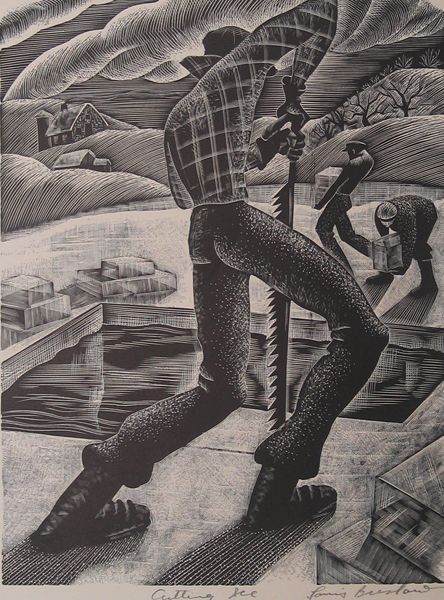
cutting iceI saw this Amy Poehler quote today: “I have told people that writing this book has been like brushing away dirt from a fossil. What a load of shit. It has been like hacking away at a freezer with a screwdriver.”
Writing can go many ways for me. Sometimes the words and story come more easily, particularly if I just let my standards go. I don’t mean that in a flip way. “Standards” in this case are imaginary constructs that say if I don’t write for long enough, the better words will come along. They’re false standards. Probably I’m suffering through low-level writing neurosis when the writing slows down. When the neurosis kicks in, I’m hanging out with Amy, chipping the ice.

It’s a bad writing place to be. I’m better off letting the standards go, writing steadily through the misgivings, and then evaluating what I’ve done later.

Close your eyes. Type as if no one is watching.

Sunday Writing: Advice for Beginning Writers

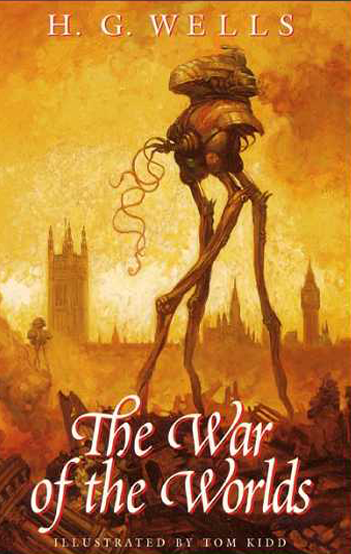
war)of_the_worlds_cover_art_2Each year I taught the Science Fiction class in the high school, I asked my students to write a science fiction story, but it was a literature class, not a creative writing one, so I didn’t have the time to have them do the exercises that a writing class would do.  They had to write the story with very little instruction.

The first exercise to get them into the story telling mode was to write their own “Global Dispatches.”  This was a follow up to studying H. G. Well’s The War of the Worlds.  The students were to write their own version of what they experienced during the week-long invasion of Earth by the Martians as if it happened in Grand Junction today.  The idea was that their story would be a bit of oral history, as if a historian came to town after the invasion to talk to the people who made it through to the end.  I got the idea from Kevin Anderson’s brilliant anthology, War of the Worlds: Global Dispatches, that told Well’s story from the point of views of famous personages who were alive when the invasion would have happened had it been real.

The objective of the assignment was to get the kids into story telling mode, but I needed to boil down the instructions to what I thought was the essence of making a story interestingly dramatic (because without instruction, most of them would write tons of exposition that didn’t read like a story).

Here’s the advice I put up on the board for them as they worked on their narratives:

Writing Stories that Work

– Write in scenes–don’t summarize!

  • Tell the reader at least 3 details from different senses
  • Tell the reader what the character did or what happened
  • Tell the reader how the character felt about what he/she did or what happened.
  • Use your imagination and your knowledge to provide specific details in the scene.  If you don’t know details, make them up.
  • Put your fingers on the home row (if you are typing), close your eyes, and then start.  The words will be on the page, but the story is in your head.  Be in your head, not on the page.

This assignment presented this way almost always seemed to work and their narratives were much more interesting.  The quickest form of the list is this: scenes, senses, actions, feelings, specific details, close your eyes.

Submitting Short Stories

writer silhouette

The standard advice to short fiction writers on submitting their work is to follow these steps:

  1. Write the very best story you can.
  2. Seek meaningful and educated feedback on the story.
  3. Do your final revisions.
  4. Familiarize yourself with the markets.
  5. Identify a hierarchy of markets that are appropriate for the story from most desirable to second most etc. (this might be based on pay rate or circulation, but it could also be based on how often stories in the venue are up for awards or who else appears in it–money isn’t everything).
  6. Correctly format the story according to the market’s directions, and then send it.
  7. Work on your next story while waiting to hear about the first one

That’s good advice and generally I’d recommend it.

However, what if you are prolific?  I often think of a story that I’d heard about Robert Silverberg: When he grew serious about writing as a young man, he wrote a million words a year for a few years.  That’s over 3,000 words a day without missing any days!  He had more markets to look at (although not that many more than what we have now), and he was writing fast enough to fill each of the top magazine’s entire table of contents every month.  Clearly the magazines wouldn’t make an all-Robert-Silverberg issue, so Bob wrote under pseudonyms.  Even doing that, though, he was writing faster than the top markets could absorb his work.  In 1958, he published 80 short stories!  That’s not just a good year; for many authors it would be an entire career.

If you want to have your mind blown, check out Robert Silverberg’s summary bibliography.

How did Bob do that?  He submitted work to a lot of places.  I don’t know this for sure, because I haven’t asked him, but I’ll bet that in 1958 he submitted more stories than were accepted for publication.  Yes, even Robert Silverberg saw rejection notes.  Also, I’ll bet that because he was writing so fast, when he looked at his hierarchy of markets, he could not submit every story to his top market because he already had a story under consideration there.  He had stories under consideration at his top twenty markets or more.  Because he was prolific, he could not wait for the top markets to open; he submitted stories everywhere.

Submitting stories everywhere is a different submission philosophy, but if you are prolific, I think it is a good one.

My other example of submitting everywhere is the late Jay Lake who was also hugely prolific.  The year before he won the John W. Campbell Award for Best New Writer, he was reporting a couple short story sales a week.

I bring these examples up to explain my current submitting philosophy, which I’ve come to think of as the shrapnel grenade school of submitting short fiction.  Right now, I have twenty-one manuscripts in the mail.  A month ago, I had thirty-two.  I also have thirteen stories at home waiting for more revision or for the right market to open.  (The opposite philosophy I think of as the cruise missile school of submitting, which has been perfected by Ted Chiang.)

The shrapnel grenade philosophy has a few advantages:

  1. Being prolific means that I’m practicing a lot.  Finishing several short stories a month makes my learning and growth curve steeper than if I was writing slower.
  2. Submitting often makes me familiar with the market.  Right now I have a good overview of who is editing where and what they are looking for.  I’m particularly interested when new markets appear or anthologies open.
  3. Submitting a short story is the moment when an author briefly interacts with the larger world of editors and publishers.  Submitting often means that there are more of those interactions.  The editors are more likely to remember me when my newest story crosses their desk.
  4. I feel more professional when I produce stories and submit them at a regular interval.  I feel less like a hobbyist.  This is not a dig on writers who are not prolific.  It is only a comment on how I feel.  Everyone’s path up the mountain is their own.

So, for right now, I’m trying out many markets.  This means that I’m following a piece of advice Dean Wesley Smith gave me a bunch of years ago, which was to “Pump the editors.”  I know, I thought that was an oddly phrased sentence too, but what he meant was to write a bunch and keep your work circulating.  The editors will eventually figure out that you are for real and serious about what you are doing.

And that’s a good thing.

P.S.  I forgot to add where I’m finding all these markets.  I lean heavily on ralan.com (every writer who uses his site ought to send him a donation), and the Submission Grinder.  I also learn about market via networking with writers and editors I’ve come to know over time.

Page 2 of 2

Powered by WordPress & Theme by Anders Norén