
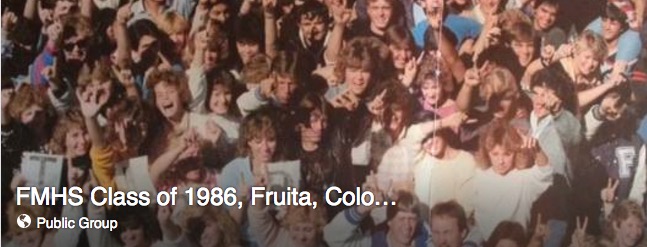
The FMHS class of 1986 held their 30th reunion this weekend. That’s my wife’s graduating class. We perused the photos and videos that the class posted on their FB website. The don’t look that old. I can still see the teenagers in them.
Almost ten years ago, I wrote this article about characterization using the high school classes I was teaching as my examples. Since I’ll be starting a new school year in another month, I think I’ll do the exercise again. Has anything changed that I can notice? How different are they from the class of ’86?
Creating characters must be hard because I read so many unconvincing, thin or cliched characters in fiction. How high school characters are portrayed often bothers me because so many people default to a handful of stereotypes. Since I teach high school and really, really, really respect high schoolers as people, it’s particularly upsetting to see them boiled down into predetermined niches.
We administered the ACT test to all of our juniors today. I proctored for two hours, which involved walking back and forth among the desks for the whole time, I took notes on what I saw.
If you’re interested, here’s raw data from Fruita Monument High School in western Colorado, a predominantly white student body that draws about 2/3 of the kids from upper-middle class suburban neighborhoods and 1/3 from rural ranches and farms. We have 1,200 students in three grades.
Twenty-one students took the test in the room I proctored, 17 girls and 4 boys, an imbalance caused by the randomness of assigning kids to rooms alphabetically.
– 14 carried cell phones (they couldn’t have cell phones on them during the test, so we had to collect them. Some of the kids remembered this and didn’t bring a cell phone–clearly I have to buy a cell phone for my 11th grade son!)
– 3 wore hats
– 1 wore a school sweatshirt
– 1 wore a university sweatshirt
– 1 wore a Tigger sweatshirt
– 9 sweatshirts total–none of them were dressed in a style we normally call “preppy”
– 2 Hispanic students, no Black or Asian ones
– 1 facial piercing (a small diamond stud on the side of a nose)
– 2 unnatural hair colors
– 2 wore glasses (lots of contacts?)
– 1 male with an earring
– 6 females with hair below their shoulder blades
– 4 in shorts. The rest in long pants, mostly jeans. It’s been a cold spring.
They were all cooperative, quiet and industrious. Once again, the luck of the draw. I taught a sophomore class here a couple of years ago that was phenomenally bad. I took three of the worst out to work on a paper with them alone while my student teacher tried to handle the rest. The three I had were supposed to be working on a paper about influential people in their lives. They all wanted to write about their probation officers.
The teacher who teaches in the room I was proctoring in today had the kids do an “I” poster for an assignment. The kids are supposed to make a collage of who they are. It reminded me a little of the writing assignment in The Breakfast Club, where the kids who were serving a Saturday detention were supposed to do an essay on who they thought they were. I broke the posters down into categories:
– 2 pictured guns, one in a hunting context, and the other in a redneck context (to use a stereotype; the poster was hunting rifles and pickups)
– 4 agriculturally centered (livestock, John Deere machinery, etc.)
– 6 sports
– 10 fashion
– 7 music
– 1 overtly religious
– 5 travel
– 6 hunting
– 3 environmental
– 1 sort of disturbing one, that included the phrase, “Every killer lives next door to someone”
So, where am I going with this? First, when a writer wants to write about high school, he/she has to decide first which high school. FMHS is like the proverbial elephant being described by a bunch of blind men. Who your character is determines the high school in the story. For some individuals, high school is scary. For others it is fun. For many, they don’t have much of an opinion about it one way or another.
Here’s something to think about: the very best high schools in America have some kids who are deeply disturbed, lost to drugs, victims (or dealers) of violence, potential psychopaths or profoundly unhappy. The very worst high schools in America have some kids who are academically excellent, love their classes, are kind to their friends, have good relationships with their parents, and are moving forward into fulfilling and happy lives.
I guess what I’m arguing against here is simplification and stereotypes. High school students are not simplified versions of adults. They are not driven by only a single motivation (any more than some adults are driven by a single motivation). They are complicated, contradictory, fully faceted human beings, capable of cruelty, tenderness, cowardice, bravery and every other emotion you can think of. They can be clear visioned or confused (sometimes several times in the same day, just like you or me). Their hurts and their passions are as deep and profound to them as they are to people in their thirties.
If you want to be honest in your portrayal of them, keep in mind that every individual is . . . well . . . individual.
 In May
  Most everyone who has been responding to my posts seems well beyond beginner status as writers, but I’ve found that going back to the basics has always been good for me. For example, two of the best books I have on writing are ones that were written for rank beginners, but I keep revisiting them. Maybe it’s because I’m slow and simple, or maybe because reviewing the basics keeps me anchored. I figure if my basics are solid, my experimental flights of fancy may have a better chance of working.
 Denver Comic Con was this weekend. I heard that 120,000 people attended on Saturday, making the convention the fifth largest comic con in America (the world?). Since the biggest convention I’d ever been to before was a WorldCon, with maybe 8,000 or so people, you can understand that Denver’s event was overwhelming. You know how babies can sometimes be over stimulated? I suffered the adult equivalent.