 Most of us have times when we don’t know what to write next. It could be in the middle of a project or in between them, but no matter what we do, we’re stalled. So what can we do to work on our writing when we can’t write? Reading, of course, is one answer, and you certainly should be doing that, but here’s a more active exercise: try copying some of the writing you admire.
Here’s how to do the exercise: find a passage someone else wrote that you think is really well done. Now, copy it. Don’t make a single change. Be very aware that you get the comma, periods and paragraph breaks right. What you are doing is trying to internalize a successful writing rhythm.
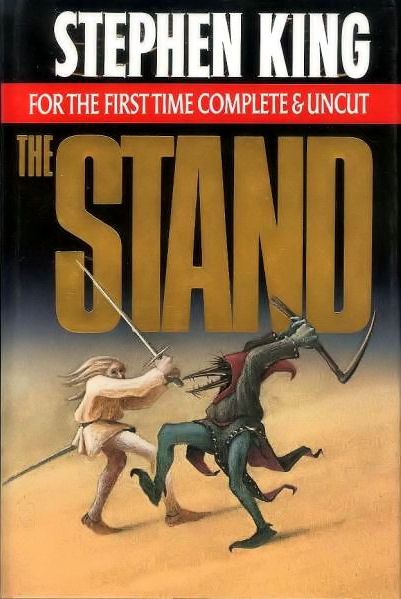
 How this works is that you will start to get a feel for how the writer you like goes about being who they are. Here’s a bit from The Stand by Stephen King:
Stu, who only understood that they were all in a hell of a pinch, turned Hap’s voice down to a meaningless drone and watched the Chevy pitch and yaw its way on up the road. The way it was going Stu didn’t think it was going to make it much further. It crossed the white line and its left hand tires spumed up dust from the left shoulder. Now it lurched back, held its own lane briefly, then nearly pitched off into the ditch. Then, as if the driver had picked out the big lighted Texaco station sign as a beacon, it arrowed toward the tarmac like a projectile whose velocity is very nearly spent.
If I was going to use King’s The Stand for my copying exercise, I would keep copying for another thousand words or so, but even typing this little section, I notice that he didn’t put a comma after “The way it was going” that I would have put in, and that he used “going” twice in that sentence, so maybe my obsession with removing repeated words isn’t quite as critical as I think. I like his verbs too: crossed, spumed, lurched, pitched, arrowed.
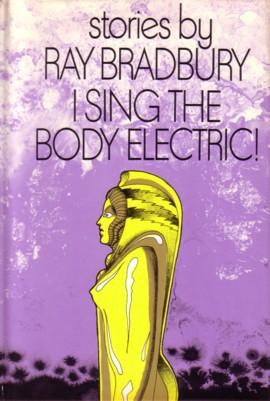
If I copy a passage from another author, like Ray Bradbury, I get a totally different feel:
There were fireworks the very first night, things that you should be afraid of perhaps, for they might remind you of other more horrible things, but these were beautiful, rockets that ascended into the ancient soft air of Mexico and shook the stars apart in blue and white fragments. Everything was good and sweet, the air was that blend of the dead and the living, of the rains and the dusts, of the incense from the church, and the brass smell of the tuba on the bandstand which pulsed out vast rhythms of ‘La Paloma.
 Bradbury likes the long sentence here, and I notice his tendency to pair and to list, so the air is “ancient soft,” the fragments were “blue and white,” everything was “good and sweet,” while the air also blended the “dead and the living,” and “rains and the dusts.” His second sentence (did you notice he did this in only two sentences, while King’s passage that was only a tad longer took five sentences?) is mostly a list of connected noun phrases.
Bradbury’s rhythm is different from King, and copying him teaches me different lessons.
Some writer’s rhythms stay in my head longer than others. H.P. Lovecraft, for example, is hard to shake, as is Bradbury, and the point of the exercise isn’t to make my writing become their writing, but by doing this I can feel what they were up to for a few minutes so that I can incorporate what I like best from them into my own toolbox. How I blend my influences becomes my voice, but I don’t think I can go too far wrong if I find myself channeling, just a little bit, the echoes of Bradbury, Le Guin, Bronte, King, Steinbeck, Hemingway or Poe.
Try it. Copy somewhere between 200 to 1,000 words. Tell me what you notice.
 One of my students wrote a paper on how to improve writing, and he focused on voice and style. He sent me a set of questions. Here were my answers:
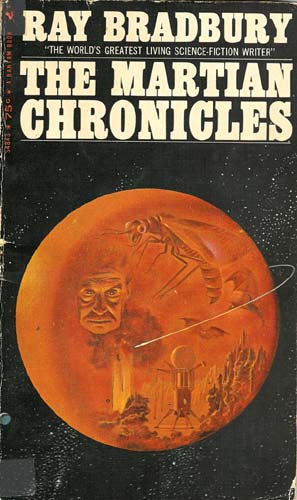 Sometime when I was a little kid, I decided I wanted to be a writer. I’d always been a reader. The Tom Swift stories, Tom Corbett: Space Cadet, A Wrinkle in Time, The Princess of Mars, Have Spacesuit, Will Travel, and the other usual suspects. Anything with a spaceship on the binding in the library, that’s what I read.
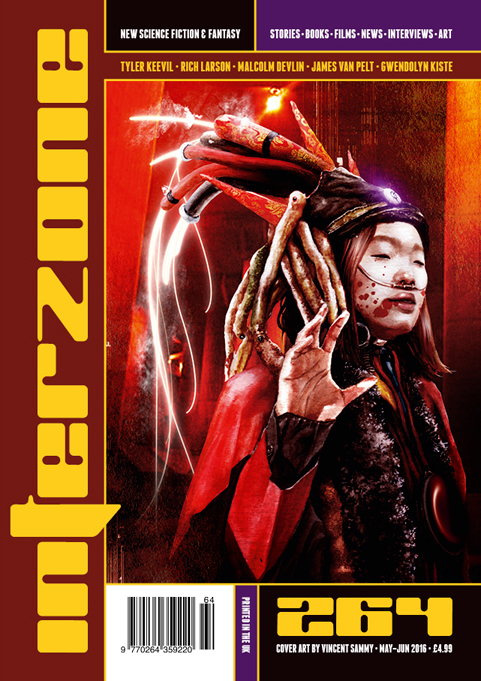 I received my contributor copy of INTERZONE #264 with my short story, “Mars, Aphids and Your Cheating Heart” within.
  When teachers break down the elements in a story, the list often looks something like this: Setting, Character, Action (plot), Dialogue, Description, Conflict, and Theme. For literary analysis this is an adequate list, I suppose. Not particularly useful for a writer, though. Which one is the most important? For me, the element that matters most when I’m trying to write–when I’m deciding what to do next–is conflict, and I had no clue what I was doing until I figured that out.
 I saw this Amy Poehler quote today: “I have told people that writing this book has been like brushing away dirt from a fossil. What a load of shit. It has been like hacking away at a freezer with a screwdriver.”
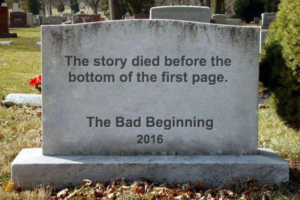 Last week I talked about writing conclusions (that don’t suck), so it only makes sense to tackle writing beginnings (that also don’t suck).
 Writing the conclusion to a story can be hard! First off, the whole story has been leading to this last page, so the sense of responsibility to the story and to the reader is huge. I don’t want to end the story on a lame note, and I don’t want the readers to feel cheated, as if my story was a shaggy dog joke whose only point was in seeing how long I could keep them paying attention with the promise of a punch line that would never come.
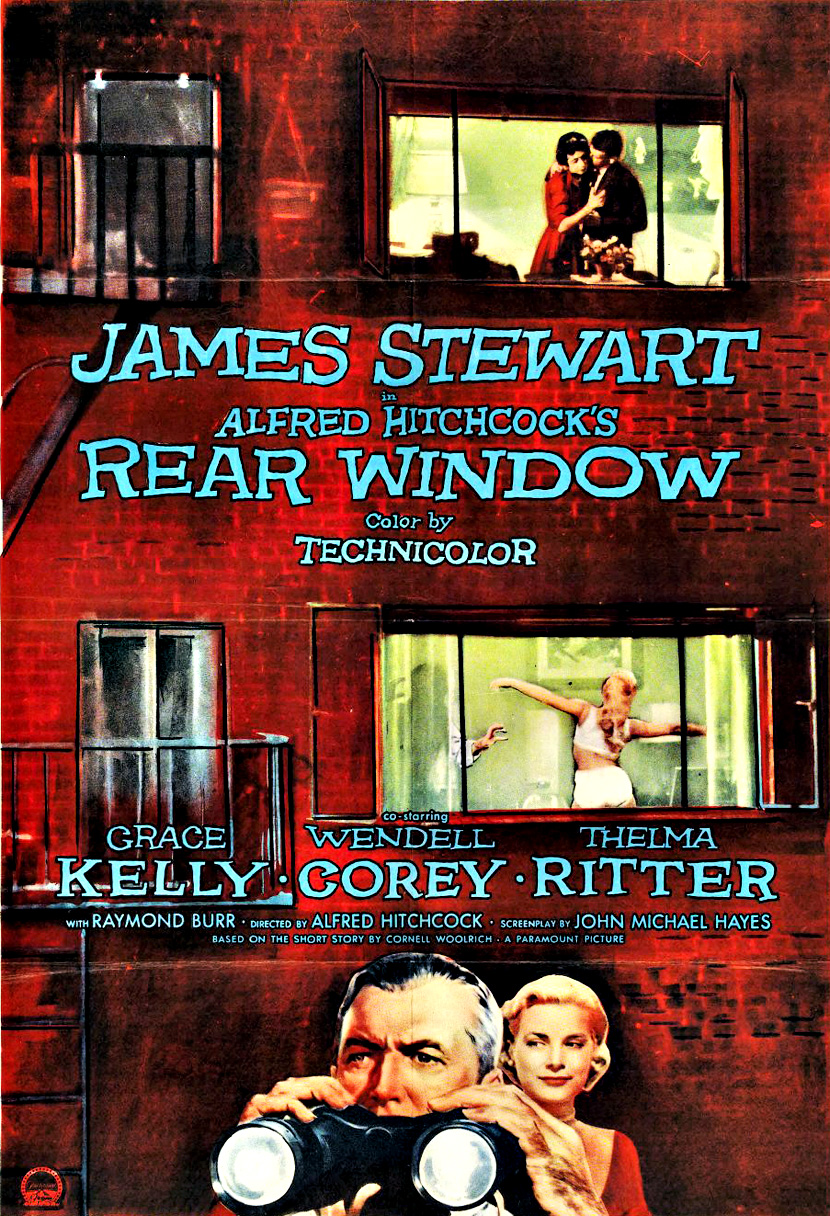 I’ve become increasingly a believer in getting out of your head and into the world to improve writing. Sometimes the easiest way to to do this is to read more. I’m surprised at how many writers I talk to who are trying to grow themselves as writers who have given up on their youthful reading habits. It turns out that reading time and writing time exactly overlap, so they quit reading. Argh! Big mistake! For myself, I have to keep reading to clear my head of my own rhythms and to remind myself that’s there’s many ways to assemble sentences and stories. Good movies or television can get me out of my head too.
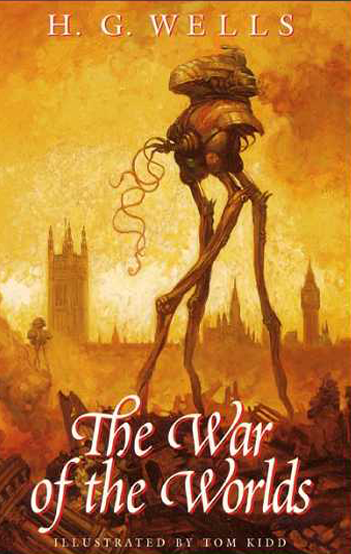 Each year I taught the Science Fiction class in the high school, I asked my students to write a science fiction story, but it was a literature class, not a creative writing one, so I didn’t have the time to have them do the exercises that a writing class would do. They had to write the story with very little instruction.